
6 Signs that Make a Secure Relationship
By Jim Hall, MS, Love Addiction | Attachment Specialist, author with over 15 years of experience.
You don't need a secure attachment style to experience a happy, fulfilling relationship -- Knowledge is Key.
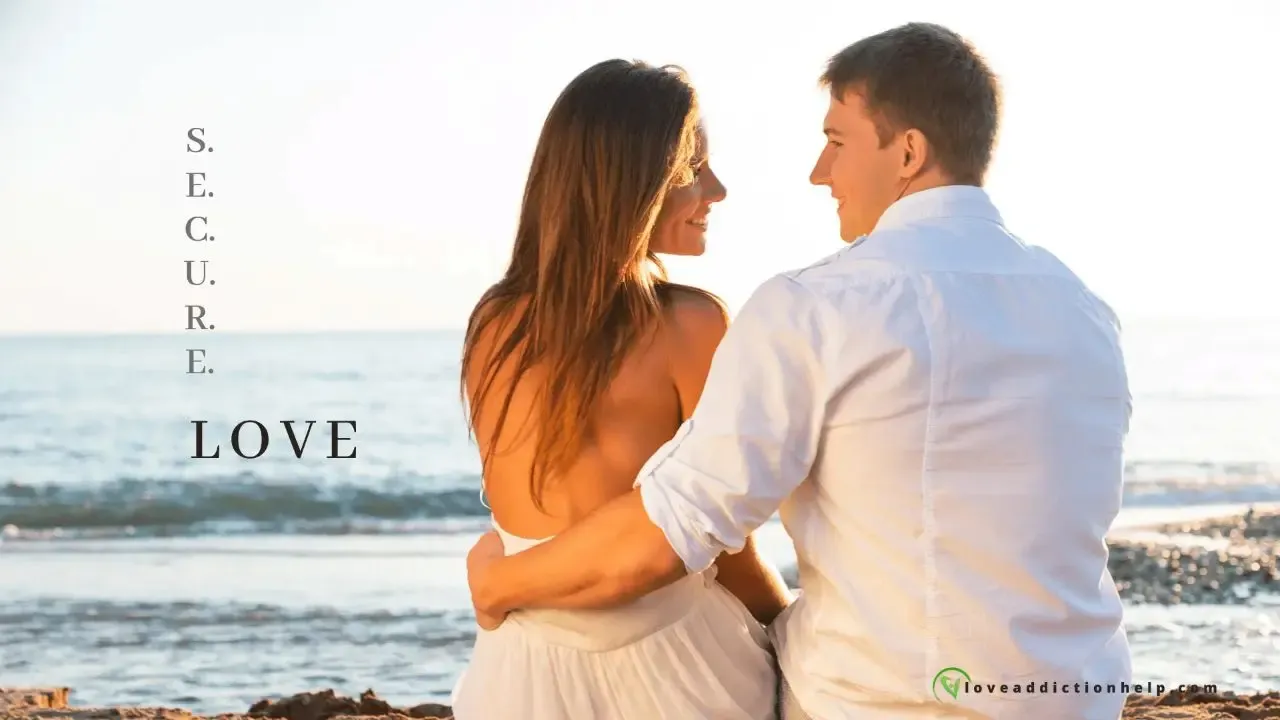
In this article, you will learn about S.E.C.U.R.E. -- which describes the six fundamental overlapping qualities that make up a healthy, secure-based relationship.
Article Summary
- Signs of a secure relationship
- What a secure relationship looks and feels like
- Six overlapping qualities that make up secure relationships
The experience of a secure, healthy relationship is not a familiar one for many, particularly for those with an insecure attachment style (e.g., anxiously attached love addict or avoidant).
Whether we realize it or not, most of us desire to have a securely attached relationship.
Secure relationships contribute to our well-being and healthier functioning (Ross, K. M., et al., 2019).
There's a good chance you know when you're in a Secure Relationship. You don't feel embittered, worried, or consumed. Instead, you feel content, satisfied, and hopeful in such relationships.
In contrast, when you're in an unhealthy, toxic, or addictive relationship, you feel overly dependent, obsessed, confused, and if you're avoidant, engulfed. And though you may feel an occasional "high," the anxious, disconnected, and unfulfilled feelings run chronically.
Why do some people fall for insecure, addictive type relationships instead of secure, healthy ones?
For many, it's familiarity.
As a child, if we grow up with parents or primary caregivers where the example of a relationship was troubled or less than healthy/secure-- then, through no fault of our own, we will perceive this example as the norm, it becomes our relationship schema, like a model, on how intimate connections are supposed to be (unhealthy/insecure).
Consequently, we grow into adulthood, mimicking what we learned, and choose romantic relationships and lovers that feel all too familiar —unhealthy, anxious, and obsessive.
Here is the thing:
We can't change what we experienced in childhood.
We can, however, change our relationship schema--how we view romantic relationships--our perception of how relationships should actually look and feel.
You don't have to read tons of literature to make this change.
You don't even have to have a secure attachment style, either.
Awareness is key to gaining a new understanding of what relationships should look and feel.
One effective way to gain a new understanding of the look and feel of a healthy relationship and change old, insecure beliefs is by using the S.E.C.U.R.E. acronym.
As you will see below, S.E.C.U.R.E. is a robust framework that outlines six vital qualities essential for a secure and thriving relationship.
- You can use S.E.C.U.R.E. to help you (or someone you know) keep a sense of what a healthy, secure relationship looks or feels like (its meaning/concept).
- Keep mindful of S.E.C.U.R.E. to help you strive for these essential qualities in your relationships.
- You can also use this to help you clarify whether a current relationship is secure or not.
- If S.E.C.U.R.E. doesn’t reflect your relationship and causes more distress than happiness, consider seeking a therapist, counselor, or relationship coach for guidance.
S.E.C.U.R.E. LOVE — What a Secure Relationship Should Look and Feel Like if You're In One
If you are in a secure relationship, here's what you can expect in terms of its appearance and emotional experience.
S: Safety
You consistently feel safe and protected being together. You trust each other and see each other as reliable. You feel secure in disclosing vulnerabilities or sharing inner heartfelt thoughts or feelings.
You each treat one another not like an enemy, but as the one who matters most. If you feel anxious or unsure, you can turn to your partner to lean on. Physical or emotional abuse is non-existent.
You know where you stand together. Even when you're apart, you feel confident in your connection together. You sense things will work out during conflicts, and you never worry much about losing your partner.
E: Esteem
Romantic partners in a secure relationship hold each other in high regard. You know your partner wants you, and you want your partner.
You feel appreciative and grateful for sharing and experiencing your lives together.
You like and love each other on the inside as much as on the outside. You cherish each other's unique qualities and characteristics.
You genuinely care about each other's joys, fears, and hurts. You value one another despite having imperfections.
You don't view each other as being superior or inferior but as equally valuable and deserving of love.
C: Commitment
Mutual commitment is the foundation of a secure relationship. By making a genuine commitment to each other, you choose to love and prize the special bond you have.
You see each other as having the capacity to stick around for the long haul. You choose to honorably value each other's needs, wants, and wishes.
You don't downplay or minimize each other's words or promises-- you take them seriously and are accountable to them.
Love never has to be "earned" - but is freely given and received through mutual devotion.
Dedication never ceases nor flounders when flaws are exposed-- but continues to grow and mature.
Through ups and downs, good and bad times-- the commitment to one another endures.
U: Understanding
You and your partner have understood "what you see is what you get"-- thus, you've never fallen in love with an imaginary version of each other, but for the person you've come to know and the one you see today. Your expectations are realistic and grounded in reality.
When faced with misunderstandings, you strive to understand each other's perspectives, enhancing intimacy and connection.
You wholeheartedly support most of each other's hopes and desires.
You understand the importance of allowing each other's autonomy and independence while maintaining a healthy balance of dependency. In your relationship, you each connect at a deeper emotional level with empathic understanding.
R: Respect
Secure, loving relationships and mutual respect go hand in hand. You each share a deep respect for one another, including each other's commonalities and differences.
You see each other as the best of friends. You are supportive and caring, allowing each other's ambitions to flourish while respecting their freedom to make choices without controlling or undermining their confidence.
Respect says, "I see you, hear you, your reality is important, and you matter as equally as I."
Unconditional acceptance reveals this deep respect you have for one another. This does not mean you should tolerate unhealthy behaviors (e.g., addiction problems, controlling behaviors, abuse)-- a sign of self-respect.
E: Effective Communication
Effective communication is a must to sustain intimacy and closeness in a relationship. You and your partner communicate transparently and actively.
You're mentally "checked in," not shut out or turned away. You are honest when sharing thoughts and feelings.
You express needs, wants, and expectations directly and congruently. You always take each other's well-being into account.
When conflicts arise, focus on resolution by talking, listening, and compromising —doing so in a contained, caring, and nonaccusatory manner. Shared communication is never from a 'one-up' or 'one-down' position -- but encompasses the first five SECURE qualities above.
If You Want To Feel Secure In A Romantic Relationship, Then Choose A Secure Relationship!
No relationship is perfect, but if you have a relationship where the S.E.C.U.R.E. qualities are present MOST of the time- it's a safe bet you are in a pretty darn good relationship.
Finding a romantic partnership and developing a long-term relationship with a person is a fundamental process that most of us strive to achieve. The success or failure of this venture can have significant consequences on our happiness, health, and well-being.
If you desire a happy, fulfilling romantic relationship that will enhance your life and ability to thrive, be mindful of S.E.C.U.R.E. Strive for it, and expect it.
Healthy romantic relationships are about:
- Safety
- Esteem
- Commitment
- Understanding
- Respect
- Effective Communication
One last thing
Don't buy into any false notion that, given a shaky or even toxic relationship history, you can't have a healthy, secure relationship.
Even if all of your past relationships were troubled, addictive, or codependent, it doesn't mean you have to repeat this history.
You CAN change past relationship patterns when you intentionally choose to do so.
Frequently Asked Questions
1) Do I need a secure attachment style?
No. Secure relationships are built through awareness, growth, respect, and consistent actions.
2) What if my history is toxic or codependent?
You can rewire patterns using frameworks like S.E.C.U.R.E. and intentional inner work.
3) What does secure love feel like?
Stable, supportive, emotionally safe. You feel valued, connected, and able to resolve conflict with care.
4) How do I spot insecure or love-addicted dynamics?
Obsession, abandonment fear, reassurance chasing, dramatic highs/lows, or chronic push-pull.
5) What does S.E.C.U.R.E. stand for?
Safety, Esteem, Commitment, Understanding, Respect, Effective Communication.
6) Can a relationship become secure over time?
Yes—when both partners commit to growth, communication, and healing.
7) How can a attachment recovery coach help?
By helping you break patterns, heal attachment wounds, rebuild self-worth, and practice secure relating.
Strive for S.E.C.U.R.E. Relationships — You Deserve It
You don’t need a perfect past to build the love you want. If you’re ready to rewire your patterns, I can help.
Relationship Recovery Coaching
Reference: Ross, K. M., Rook, K., Winczewski, L., Collins, N., & Schetter, C. D. (2019). Close Relationships and Health: The Interactive Effect of Positive and Negative Aspects.Social and Personality Psychology Compass (6), e12468. https://doi.org/10.1111/spc3.12468